Start off on your hands and knees, then lift your leg off the floor and hold the foot with your hand.
Use your hand to hold the foot or ankle, keeping the knee fully flexed, stretching the quadriceps and hip flexors.
Focus on extending your hips, thrusting them towards the floor. Hold for 10-20 seconds and then switch sides.
plyometricsbeginner
Alternate Leg Diagonal Bound
Muscle
quadriceps
Equipment
Bodyweight
Also works
abductors, adductors, calves, glutes, hamstrings
How to do it
Assume a comfortable stance with one foot slightly in front of the other.
Begin by pushing off with the front leg, driving the opposite knee forward and as high as possible before landing. Attempt to cover as much distance to each side with each bound.
It may help to use a line on the ground to guage distance from side to side.
Repeat the sequence with the other leg.
strongmanbeginner
Backward Drag
Muscle
quadriceps
Equipment
other
Also works
calves, forearms, glutes, hamstrings, lower back
How to do it
Load a sled with the desired weight, attaching a rope or straps to the sled that you can hold onto.
Begin the exercise by moving backwards for a given distance. Leaning back, extend through the legs for short steps to move as quickly as possible.
strengthintermediate
Barbell Full Squat
Muscle
quadriceps
Equipment
barbell
Also works
calves, glutes, hamstrings, lower back
How to do it
This exercise is best performed inside a squat rack for safety purposes. To begin, first set the bar on a rack just above shoulder level. Once the correct height is chosen and the bar is loaded, step under the bar and place the back of your shoulders (slightly below the neck) across it.
Hold on to the bar using both arms at each side and lift it off the rack by first pushing with your legs and at the same time straightening your torso.
Step away from the rack and position your legs using a shoulder-width medium stance with the toes slightly pointed out. Keep your head up at all times and maintain a straight back. This will be your starting position.
Begin to slowly lower the bar by bending the knees and sitting back with your hips as you maintain a straight posture with the head up. Continue down until your hamstrings are on your calves. Inhale as you perform this portion of the movement.
Begin to raise the bar as you exhale by pushing the floor with the heel or middle of your foot as you straighten the legs and extend the hips to go back to the starting position.
Repeat for the recommended amount of repetitions.
strengthintermediate
Barbell Hack Squat
Muscle
quadriceps
Equipment
barbell
Also works
calves, forearms, hamstrings
How to do it
Stand up straight while holding a barbell behind you at arms length and your feet at shoulder width. Tip: A shoulder width grip is best with the palms of your hands facing back. You can use wrist wraps for this exercise for a better grip. This will be your starting position.
While keeping your head and eyes up and back straight, squat until your upper thighs are parallel to the floor. Breathe in as you slowly go down.
Pressing mainly with the heel of the foot and squeezing the thighs, go back up as you breathe out.
Repeat for the recommended amount of repetitions.
strengthintermediate
Barbell Lunge
Muscle
quadriceps
Equipment
barbell
Also works
calves, glutes, hamstrings
How to do it
This exercise is best performed inside a squat rack for safety purposes. To begin, first set the bar on a rack just below shoulder level. Once the correct height is chosen and the bar is loaded, step under the bar and place the back of your shoulders (slightly below the neck) across it.
Hold on to the bar using both arms at each side and lift it off the rack by first pushing with your legs and at the same time straightening your torso.
Step away from the rack and step forward with your right leg and squat down through your hips, while keeping the torso upright and maintaining balance. Inhale as you go down. Note: Do not allow your knee to go forward beyond your toes as you come down, as this will put undue stress on the knee joint. li>
Using mainly the heel of your foot, push up and go back to the starting position as you exhale.
Repeat the movement for the recommended amount of repetitions and then perform with the left leg.
strengthbeginner
Barbell Side Split Squat
Muscle
quadriceps
Equipment
barbell
Also works
calves, hamstrings, lower back
How to do it
Stand up straight while holding a barbell placed on the back of your shoulders (slightly below the neck). Your feet should be placed wide apart with the foot of the lead leg angled out to the side. This will be your starting position.
Lower your body towards the side of your angled foot by bending the knee and hip of your lead leg and while keeping the opposite leg only slightly bent. Breathe in as you lower your body.
Return to the starting position by extending the hip and knee of the lead leg. Breathe out as you perform this movement.
After performing the recommended amount of reps, repeat the movement with the opposite leg.
strengthbeginner
Barbell Squat
Muscle
quadriceps
Equipment
barbell
Also works
calves, glutes, hamstrings, lower back
How to do it
This exercise is best performed inside a squat rack for safety purposes. To begin, first set the bar on a rack to just below shoulder level. Once the correct height is chosen and the bar is loaded, step under the bar and place the back of your shoulders (slightly below the neck) across it.
Hold on to the bar using both arms at each side and lift it off the rack by first pushing with your legs and at the same time straightening your torso.
Step away from the rack and position your legs using a shoulder width medium stance with the toes slightly pointed out. Keep your head up at all times and also maintain a straight back. This will be your starting position. (Note: For the purposes of this discussion we will use the medium stance described above which targets overall development; however you can choose any of the three stances discussed in the foot stances section).
Begin to slowly lower the bar by bending the knees and hips as you maintain a straight posture with the head up. Continue down until the angle between the upper leg and the calves becomes slightly less than 90-degrees. Inhale as you perform this portion of the movement. Tip: If you performed the exercise correctly, the front of the knees should make an imaginary straight line with the toes that is perpendicular to the front. If your knees are past that imaginary line (if they are past your toes) then you are placing undue stress on the knee and the exercise has been performed incorrectly.
Begin to raise the bar as you exhale by pushing the floor with the heel of your foot as you straighten the legs again and go back to the starting position.
Repeat for the recommended amount of repetitions.
strengthexpert
Barbell Squat To A Bench
Muscle
quadriceps
Equipment
barbell
Also works
calves, glutes, hamstrings, lower back
How to do it
This exercise is best performed inside a squat rack for safety purposes. To begin, first place a flat bench or a box behind you. The flat bench is used to teach you to set your hips back and to hit depth.
Then, set the bar on a rack that best matches your height. Once the correct height is chosen and the bar is loaded, step under the bar and place the back of your shoulders (slightly below the neck) across it.
Hold on to the bar using both arms at each side and lift it off the rack by first pushing with your legs and at the same time straightening your torso.
Step away from the rack and position your legs using a shoulder width medium stance with the toes slightly pointed out. Keep your head up at all times as looking down will get you off balance and also maintain a straight back. This will be your starting position. (Note: For the purposes of this discussion we will use the medium stance described above which targets overall development; however you can choose any of the three stances discussed in the foot stances section).
Begin to slowly lower the bar by bending the knees and sitting your hips back as you maintain a straight posture with the head up. Continue down until you slightly touch the bench behind you. Inhale as you perform this portion of the movement. Tip: If you performed the exercise correctly, the front of the knees should make an imaginary straight line with the toes that is perpendicular to the front. If your knees are past that imaginary line (if they are past your toes) then you are placing undue stress on the knee and the exercise has been performed incorrectly.
Begin to raise the bar as you exhale by pushing the floor with the heel of your foot as you straighten the legs and extend the hips to go back to the starting position.
Repeat for the recommended amount of repetitions.
strengthintermediate
Barbell Step Ups
Muscle
quadriceps
Equipment
barbell
Also works
calves, glutes, hamstrings, quadriceps
How to do it
Stand up straight while holding a barbell placed on the back of your shoulders (slightly below the neck) and stand upright behind an elevated platform (such as the one used for spotting behind a flat bench). This is your starting position.
Place the right foot on the elevated platform. Step on the platform by extending the hip and the knee of your right leg. Use the heel mainly to lift the rest of your body up and place the foot of the left leg on the platform as well. Breathe out as you execute the force required to come up.
Step down with the left leg by flexing the hip and knee of the right leg as you inhale. Return to the original standing position by placing the right foot of to next to the left foot on the initial position.
Repeat with the right leg for the recommended amount of repetitions and then perform with the left leg.
strengthbeginner
Barbell Walking Lunge
Muscle
quadriceps
Equipment
barbell
Also works
calves, glutes, hamstrings
How to do it
Begin standing with your feet shoulder width apart and a barbell across your upper back.
Step forward with one leg, flexing the knees to drop your hips. Descend until your rear knee nearly touches the ground. Your posture should remain upright, and your front knee should stay above the front foot.
Drive through the heel of your lead foot and extend both knees to raise yourself back up.
Step forward with your rear foot, repeating the lunge on the opposite leg.
strongmanbeginner
Bear Crawl Sled Drags
Muscle
quadriceps
Equipment
other
Also works
calves, glutes, hamstrings
How to do it
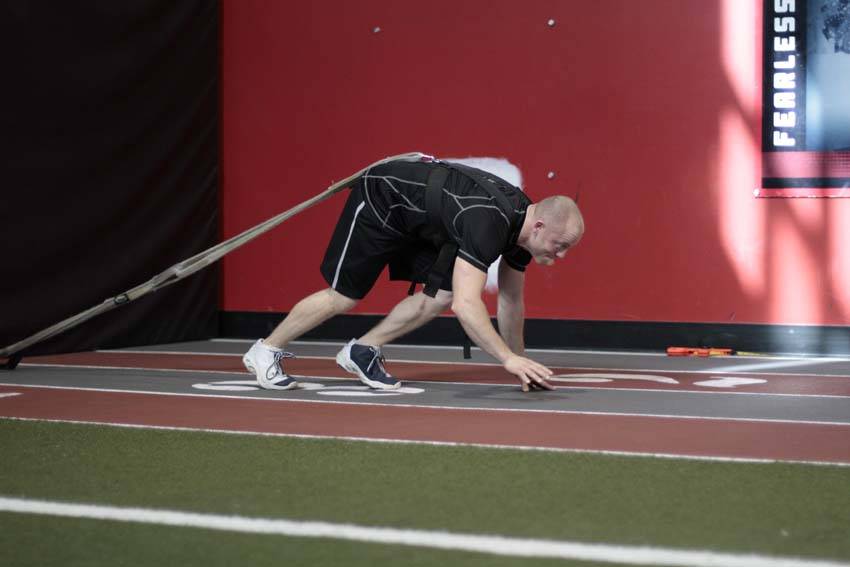
Wearing either a harness or a loose weight belt, attach the chain to the back so that you will be facing away from the sled. Bend down so that your hands are on the ground. Your back should be flat and knees bent. This is your starting position.
Begin by driving with legs, alternating left and right. Use your hands to maintain balance and to help pull. Try to keep your back flat as you move over a given distance.
plyometricsintermediate
Bench Jump
Muscle
quadriceps
Equipment
Bodyweight
Also works
calves, glutes, hamstrings
How to do it
Begin with a box or bench 1-2 feet in front of you. Stand with your feet shoulder width apart. This will be your starting position.
Perform a short squat in preparation for the jump; swing your arms behind you.
Rebound out of this position, extending through the hips, knees, and ankles to jump as high as possible. Swing your arms forward and up.
Jump over the bench, landing with the knees bent, absorbing the impact through the legs.
Turn around and face the opposite direction, then jump back over the bench.
plyometricsbeginner
Bench Sprint
Muscle
quadriceps
Equipment
other
Also works
calves, glutes, hamstrings
How to do it
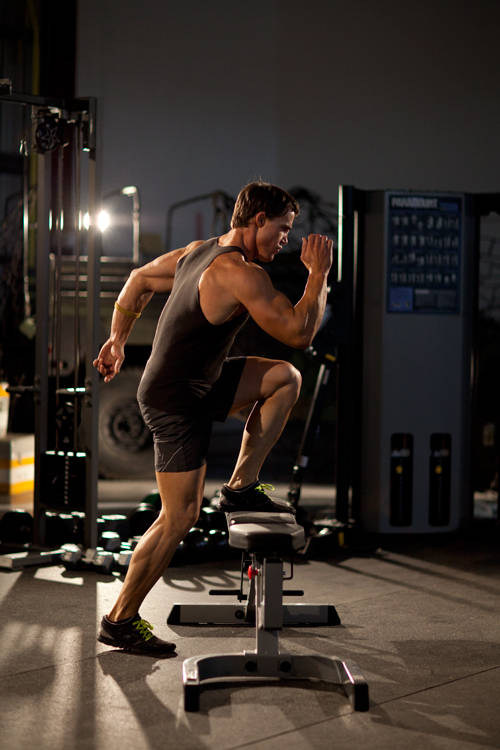
Stand on the ground with one foot resting on a bench or box with your heel close to the edge.
Push off with your foot on top of the bench, extending through the hip and knee.
Land with the opposite foot on top of the box, returning your other foot back to the start position.
Continue alternating from one foot to another to complete the set.
cardiobeginner
Bicycling
Muscle
quadriceps
Equipment
other
Also works
calves, glutes, hamstrings
How to do it
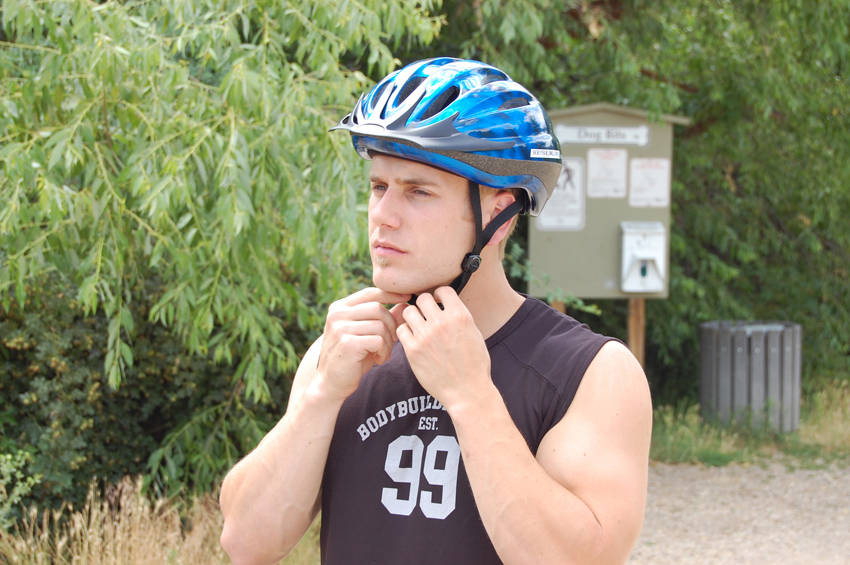
To begin, seat yourself on the bike and adjust the seat to your height.
cardiobeginner
Bicycling, Stationary
Muscle
quadriceps
Equipment
machine
Also works
calves, glutes, hamstrings
How to do it
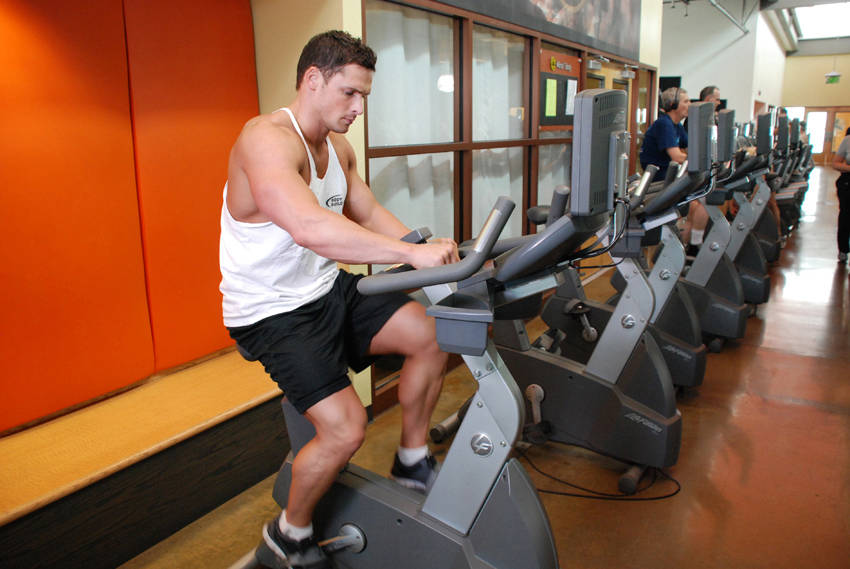
To begin, seat yourself on the bike and adjust the seat to your height.
Select the desired option from the menu. You may have to start pedaling to turn it on. You can use the manual setting, or you can select a program to use. Typically, you can enter your age and weight to estimate the amount of calories burned during exercise. The level of resistance can be changed throughout the workout. The handles can be used to monitor your heart rate to help you stay at an appropriate intensity.
strengthbeginner
Bodyweight Squat
Muscle
quadriceps
Equipment
Bodyweight
Also works
glutes, hamstrings
How to do it
Stand with your feet shoulder width apart. You can place your hands behind your head. This will be your starting position.
Begin the movement by flexing your knees and hips, sitting back with your hips.
Continue down to full depth if you are able,and quickly reverse the motion until you return to the starting position. As you squat, keep your head and chest up and push your knees out.
strengthbeginner
Bodyweight Walking Lunge
Muscle
quadriceps
Equipment
Bodyweight
Also works
calves, glutes, hamstrings
How to do it
Begin standing with your feet shoulder width apart and your hands on your hips.
Step forward with one leg, flexing the knees to drop your hips. Descend until your rear knee nearly touches the ground. Your posture should remain upright, and your front knee should stay above the front foot.
Drive through the heel of your lead foot and extend both knees to raise yourself back up.
Step forward with your rear foot, repeating the lunge on the opposite leg.
powerliftingintermediate
Box Squat
Muscle
quadriceps
Equipment
barbell
Also works
adductors, calves, glutes, hamstrings, lower back
How to do it
The box squat allows you to squat to desired depth and develop explosive strength in the squat movement. Begin in a power rack with a box at the appropriate height behind you. Typically, you would aim for a box height that brings you to a parallel squat, but you can train higher or lower if desired.
Begin by stepping under the bar and placing it across the back of the shoulders. Squeeze your shoulder blades together and rotate your elbows forward, attempting to bend the bar across your shoulders. Remove the bar from the rack, creating a tight arch in your lower back, and step back into position. Place your feet wider for more emphasis on the back, glutes, adductors, and hamstrings, or closer together for more quad development. Keep your head facing forward.
With your back, shoulders, and core tight, push your knees and butt out and you begin your descent. Sit back with your hips until you are seated on the box. Ideally, your shins should be perpendicular to the ground. Pause when you reach the box, and relax the hip flexors. Never bounce off of a box.
Keeping the weight on your heels and pushing your feet and knees out, drive upward off of the box as you lead the movement with your head. Continue upward, maintaining tightness head to toe.
powerliftingexpert
Box Squat with Bands
Muscle
quadriceps
Equipment
barbell
Also works
abductors, adductors, calves, glutes, hamstrings, lower back
How to do it
Begin in a power rack with a box at the appropriate height behind you. Set up the bands on the sleeves, secured to either band pegs, the rack, or dumbbells so that there is appropriate tension. If dumbbells are used, secure them so that they don't move. Also, ensure that the dumbbells you are using are heavy enough for the bands that you are using. Additional plates can be used to hold the dumbbells down. If more tension is needed, you can either widen the base on the floor or choke the bands. Typically, you would aim for a box height that brings you to a parallel squat, but you can train higher or lower if desired.
Begin by stepping under the bar and placing it across the back of the shoulders. Squeeze your shoulder blades together and rotate your elbows forward, attempting to bend the bar across your shoulders. Remove the bar from the rack, creating a tight arch in your lower back, and step back into position. Place your feet wider for more emphasis on the back, glutes, adductors, and hamstrings, or closer together for more quad development. Keep your head facing forward.
With your back, shoulders, and core tight, push your knees and butt out and you begin your descent. Sit back with your hips until you are seated on the box. Ideally, your shins should be perpendicular to the ground. Pause when you reach the box, and relax the hip flexors. Never bounce off of a box.
Keeping the weight on your heels and pushing your feet and knees out, drive upward off of the box as you lead the movement with your head. Continue upward, maintaining tightness head to toe. Use care to return the barbell to the rack.
strengthexpert
Box Squat with Chains
Muscle
quadriceps
Equipment
barbell
Also works
abductors, adductors, calves, glutes, hamstrings, lower back
How to do it
Begin in a power rack with a box at the appropriate height behind you. Typically, you would aim for a box height that brings you to a parallel squat, but you can train higher or lower if desired.
To set up the chains, begin by looping the leader chain over the sleeves of the bar. The heavy chain should be attached using a snap hook. Adjust the length of the lead chain so that a few links are still on the floor at the top of the movement.
Begin by stepping under the bar and placing it across the back of the shoulders. Squeeze your shoulder blades together and rotate your elbows forward, attempting to bend the bar across your shoulders. Remove the bar from the rack, creating a tight arch in your lower back, and step back into position. Place your feet wider for more emphasis on the back, glutes, adductors, and hamstrings, or closer together for more quad development. Keep your head facing forward.
With your back, shoulders, and core tight, push your knees and butt out and you begin your descent. Sit back with your hips until you are seated on the box. Ideally, your shins should be perpendicular to the ground. Pause when you reach the box, and relax the hip flexors. Never bounce off of a box.
Keeping the weight on your heels and pushing your feet and knees out, drive upward off of the box as you lead the movement with your head. Continue upward, maintaining tightness head to toe.
strengthbeginner
Cable Deadlifts
Muscle
quadriceps
Equipment
cable
Also works
forearms, glutes, hamstrings, lower back
How to do it
Move the cables to the bottom of the towers and select an appropriate weight. Stand directly in between the uprights.
To begin, squat down be flexing your hips and knees until you can reach the handles.
After grasping them, begin your ascent. Driving through your heels extend your hips and knees keeping your hands hanging at your side. Keep your head and chest up throughout the movement.
After reaching a full standing position, Return to the starting position and repeat.
strengthbeginner
Cable Hip Adduction
Muscle
quadriceps
Equipment
cable
Also works
Nothing else
How to do it
Stand in front of a low pulley facing forward with one leg next to the pulley and the other one away.
Attach the ankle cuff to the cable and also to the ankle of the leg that is next to the pulley.
Now step out and away from the stack with a wide stance and grasp the bar of the pulley system.
Stand on the foot that does not have the ankle cuff (the far foot) and allow the leg with the cuff to be pulled towards the low pulley. This will be your starting position.
Now perform the movement by moving the leg with the ankle cuff in front of the far leg by using the inner thighs to abduct the hip. Breathe out during this portion of the movement.
Slowly return to the starting position as you breathe in.
Repeat for the recommended amount of repetitions and then repeat the same movement with the opposite leg.
strongmanintermediate
Car Deadlift
Muscle
quadriceps
Equipment
other
Also works
forearms, glutes, hamstrings, lower back, traps
How to do it
This event apparatus typically has neutral grip handles, however some have a straight bar that you can approach like a normal deadlift. The apparatus can be loaded with a vehicle or other heavy objects such as tractor tires or kegs.
Center yourself between the handles if you are a strong squatter, or back a couple inches if you are a strong deadlifter. You feet should be about hip width apart. Bend at the hip to grip the handles. With your feet and your grip set, take a big breath and then lower your hips and flex the knees.
Look forward with your head, keep your chest up and your back arched, and begin driving through the heels to move the weight upward. As the weight comes up, pull your shoulder blades together as you drive your hips forward.
Lower the weight by bending at the hips and guiding it to the floor.
Exercise data from the Free Exercise DB (public domain).